A Guest’s First Few Minutes: Setting Up a Clear Welcome
A clear welcome for an overnight guest begins before the door opens: prepare directions, a place for bags and household information they can find.
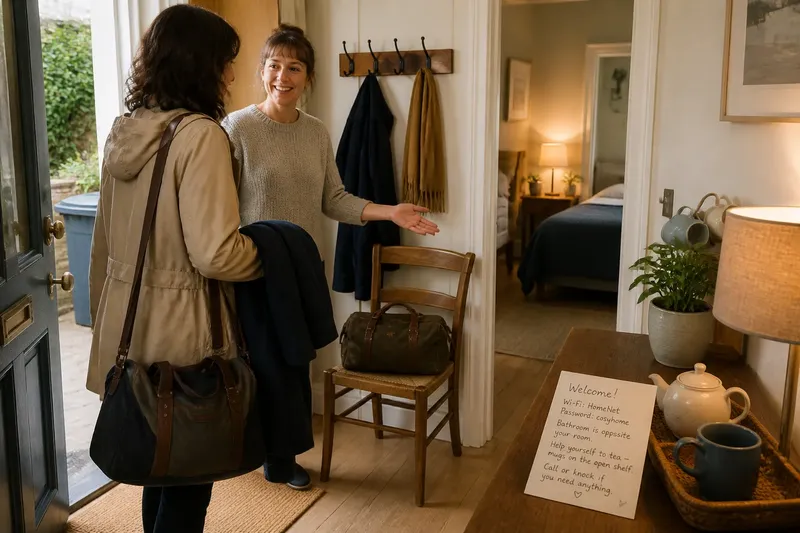
The doorbell rings while you are clearing a cup from the kitchen table. Your overnight guest has arrived with a coat over one arm and a bag to set down; the small decisions that follow can either settle them in or leave them waiting for instructions. A clear welcome for an overnight guest is less about ceremony than making the next few minutes easy to read.
Think of arrival as a short handover. Your guest needs to know where to go, where to put things and how the household works. A few preparations, kept together and made visible, can answer those questions without turning the visit into a tour.
What should be ready before the door opens?
Start with the arrival itself. Send directions that name the recognisable details a visitor will actually use: the correct entrance, a gate or buzzer, and any distinction between the front door and a shared building entrance. If parking or access needs explanation, include it in the same message rather than sending several fragments that are easy to miss.
Keep the message brief and concrete. “Use the side entrance beside the blue recycling bin” gives a clearer cue than “come round the back”. In a block of flats, say which name appears on the entry panel and what to do if the buzzer is unclear. Avoid adding security details to a message that could be forwarded casually; share sensitive access information directly and only as needed.
Then clear a landing place for belongings. A bench, sturdy chair or uncluttered patch of floor near the entrance can take a bag while you greet your guest. If the coat hooks are crowded, make one hook available or point out where a coat can be hung. The aim is not to create a special guest station, but to remove the awkward pause in which someone has to ask whether it is all right to put a bag down.
Where should bags and coats go?
Choose a place that is easy to identify and does not obstruct a door or a route through the room. A chair works well for a small overnight bag; a larger case may need a clear corner in the guest room. If the room is upstairs, say so before your guest tries to carry everything there unaided. Offer help without assuming they need it.
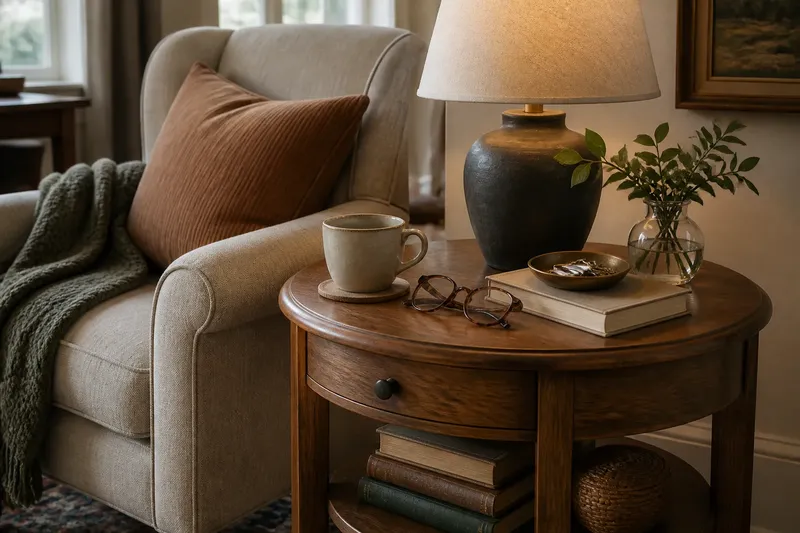
Set aside a few practical surfaces. A bedside table or clear shelf gives a guest somewhere to put glasses, a book or a phone. Make a drawer available only if it is genuinely empty and easy to use; a half-cleared drawer full of unrelated things creates more uncertainty than leaving belongings in the bag.
For coats and shoes, explain the household preference once, without making it sound like a test. If shoes are usually left by the entrance, have a mat or an obvious spot ready. If they may be worn indoors, there is no need to raise the matter unless the guest asks. Small choices are easier when the room itself offers a visible answer.
What household information is useful at once?
Put essential information where a guest can find it without searching through cupboards or messages. A note in the guest room, or a short message sent before arrival, can cover the Wi-Fi name and password, the bathroom, drinking water and how to reach you if you are in another room. Keep it to details that help someone settle in; a full account of household routines can wait.
Make the bathroom easy to locate and identify anything that might otherwise be ambiguous. A clean hand towel and a clear place for toiletries are more useful than a display of extra products. If the bathroom is shared, a simple explanation of where spare toilet paper is kept can prevent an avoidable search later.
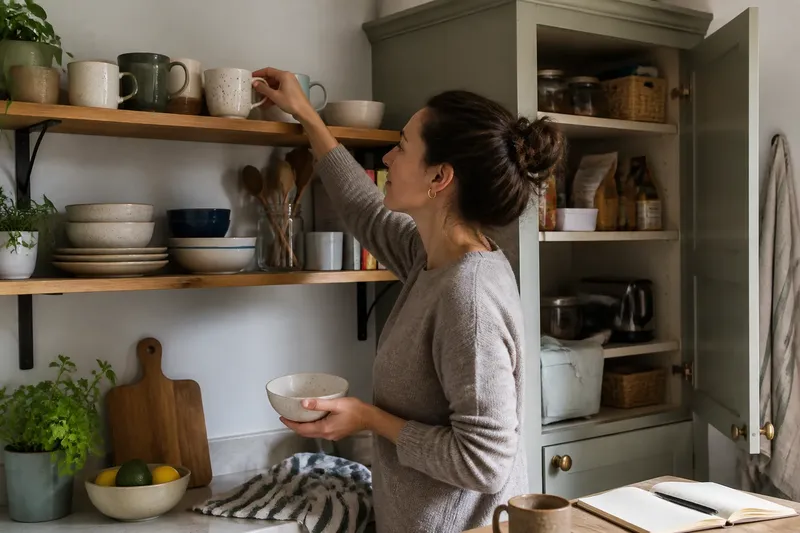
Include the ordinary points a visitor might hesitate to ask about: whether they can help themselves to tea, where mugs are, and what time the household tends to wind down. You do not need to prescribe a schedule. A relaxed invitation such as “help yourself to tea; the mugs are on the open shelf” gives permission and a location in one sentence.
How can a clear welcome make an overnight guest comfortable?
What should directions include?
Name the entrance, the useful landmark and any necessary buzzer or parking detail. Send them before the guest sets off so they can consult them on the way.
Where should an overnight bag go?
Offer a visible, unobstructed place near the entrance, then show the guest where larger luggage can stay. A clear surface is more welcoming than asking them to wait while you make room.
What information belongs in the guest room?
Keep the Wi-Fi details, bathroom location and basic household cues together in a short note or message. Leave out anything the guest is unlikely to need during the visit.
How much should you explain on arrival?
Give the essentials, then let the guest settle before adding more. A brief orientation is kinder than a rapid tour delivered while they are still holding their coat and bag.
How do you make the welcome feel natural?
Say a few useful things in the order the guest needs them: where to put the coat, where the bag can go, and where they can find a drink. Then pause. The pause matters; it gives the visitor room to notice the space and ask for what is missing rather than trying to remember a stream of instructions.
Say you are expecting a cousin who arrives carrying a weekend bag and a raincoat. You have cleared the hall chair, left a note beside the guest-room lamp with the Wi-Fi details, and sent directions naming the side entrance. When they step in, you point out the chair and say that tea is in the kitchen. The expected observable result is simple: they can put things down, find their room and choose whether to make a drink without waiting for a second set of directions.
Not worth the effort: printing a long house manual, labelling every cupboard or arranging towels into an elaborate display. Those gestures can make a short stay feel formal while hiding the few facts someone actually needs. Keep the information legible and the welcome personal.
Before the visit, check the details that can change: an entrance being temporarily unavailable, a different Wi-Fi password, or a guest room that is not ready to use. Where access, household equipment or local requirements depend on a label or the manufacturer’s instructions, follow those rather than improvising. A brief check keeps the welcome clear without adding a new ritual.
A clear welcome for an overnight guest is built from ordinary cues placed where they matter: directions before arrival, a landing place at the door and household information within reach. Once those are in place, you can give your attention to the person who has arrived, which is the most useful thing the preparations can make possible.