Open Shelves or Closed Cupboards for the Things You Reach For?
Open shelves or closed cupboards? Match everyday belongings to the storage that suits your habits, limits dust and keeps useful things easy to see.
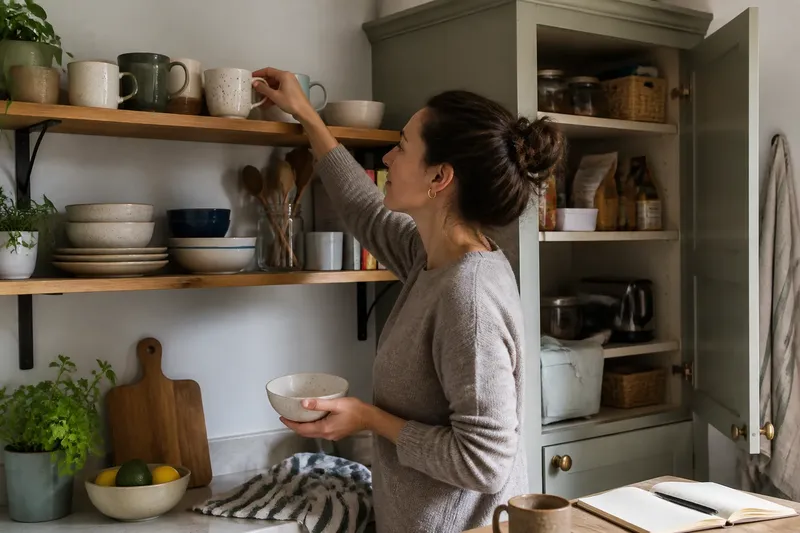
On a weekday morning, a favourite mug is easy to find on an open shelf; by evening, the shelf may also display crumbs, tins and a jumble of handles. The choice between open shelves or closed cupboards is less about which looks tidier in a photograph than about what you use, how often you clean and how much visual activity feels comfortable.
A week of ordinary household routines can reveal the answer. Rather than emptying every cupboard or buying matching containers, notice which belongings are reached for, which are left untouched, and what gathers on display. Then assign storage according to the work each item does.
What should you notice before choosing?
For a few days, pay attention to repeated movements. Does someone reach for the same breakfast bowl each morning? Are tea bags and a wooden spoon used several times a day? Do spare glasses come out only when visitors arrive? Frequency matters, but so does the small effort involved: a cupboard door is a nuisance only if it interrupts a routine you repeat often.
Also notice what looks calm to you. A row of plain white plates may feel orderly on a shelf, while a collection of colourful packets may make the same spot seem busy. This is not a test of taste. Storage is part of the room’s visible surface, so your own tolerance for seeing everyday objects should influence the decision.
Which belongings earn an open shelf?
Open storage suits items that are used frequently, handled neatly and pleasant or neutral to see. In a kitchen, that might mean everyday mugs, a small stack of bowls or a jar of wooden spoons. In a study, it could be a few current reference books or a tray for frequently used stationery. Keep the selection narrow enough that each object has a clear place.
Access is not the same as convenience if things are crowded together. Leave room to lift a bowl without shifting a stack, and avoid turning the shelf into a temporary landing spot for post, shopping bags or objects with no assigned home. When an open shelf repeatedly attracts unrelated items, the problem may be its role rather than the shelf itself; give incoming odds and ends another destination.
When does a cupboard make more sense?
Closed storage helps when belongings are visually busy, used occasionally or easier to keep together behind a door. Spare packets, small appliances, cleaning cloths and assorted cables can all be less distracting when enclosed. Cupboards also reduce direct exposure to airborne dust, which may matter for items that are not handled regularly. Shelves still need occasional cleaning, but their exposed surfaces collect dust more readily.
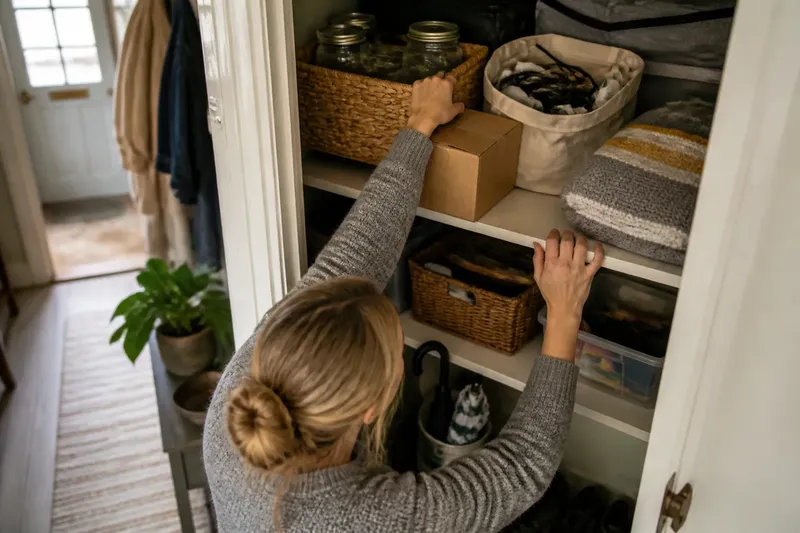
Closed doors can, however, hide a disorganised interior. If a cupboard becomes difficult to use, put similar things together and keep frequently used belongings within easy reach. Avoid stacking so tightly that one item must be removed to get another. A simple division—daily items on an accessible shelf, occasional ones elsewhere—can make a door useful rather than merely concealing a pile.
How can you make a week-long storage trial?
Try a modest experiment before changing the room. Choose one shelf or one cupboard, not an entire kitchen. The aim is to observe a real routine, so keep the rest of the room as it is and make only one change at a time.
- Day one: Choose a small group of belongings used most days, such as mugs, breakfast bowls or notebooks. Note where they currently live and whether reaching them feels straightforward.
- Day two: Move that group to an open shelf, or clear a cupboard shelf for it. Leave less-used belongings in their existing places.
- Days three and four: Use the new arrangement normally. Notice whether you reach for items more easily, whether they are put back, and whether the display feels crowded.
- Day five: Check for dust, splashes or grease where relevant. If a shelf sits near a cooker or sink, consider how often you are willing to wipe it.
- Day six: Look for signs of visual clutter. If unrelated objects are accumulating, reduce what is displayed or give those objects a different home.
- Day seven: Decide whether the arrangement earns a permanent place. Keep the items that work there; return the rest to a cupboard or another suitable spot.
Say you keep reaching for a particular mug but find the rest of the open kitchen shelf distracting. You could leave that mug and a few everyday cups on display, then move rarely used glasses behind a cupboard door. The expected observable result is a smaller, more deliberate display and less need to move other objects when taking out a cup.
What questions help settle the choice?
Do open shelves collect more dust?
Exposed surfaces are more accessible to dust than items kept behind a door, so open shelves generally need regular wiping. How noticeable this becomes depends on the room and how often the objects are used.
Are open shelves practical for everyday dishes?
They can be, particularly for dishes used often and returned neatly to the same place. Choose a spot away from likely splashes and keep the arrangement easy to lift from without disturbing neighbouring items.
Can open and closed storage work together?
Yes. Reserve open shelves for a small group of frequently used belongings and use cupboards for items that are less attractive to display, seldom needed or easier to keep together out of sight.
What if cupboard doors make daily access awkward?
Try placing the most frequently used items on a cupboard shelf that is easy to reach, or display only the few items that repeatedly interrupt your routine. The best arrangement is the one you can put back into order without extra fuss.
What is not worth the effort?
There is little value in decanting every packet into matching jars merely to create a uniform shelf. Containers need space, cleaning and labels, and they can make restocking less obvious. Use them where they solve a real problem, such as keeping a small group together, not as a requirement for making open storage look acceptable.
For open shelves or closed cupboards, let the week’s ordinary use outweigh an idealised picture of the room. Keep visible what you reach for and do not mind seeing; close away what creates visual noise or needs less frequent access. A useful final check is simple: after taking something out, can you return it to its place without rearranging the rest?