The Clear Route Through a Room: Why Circulation Matters
A clear route through a room makes everyday movement easier. Learn how to spot blocked paths and reposition existing furniture without buying more.
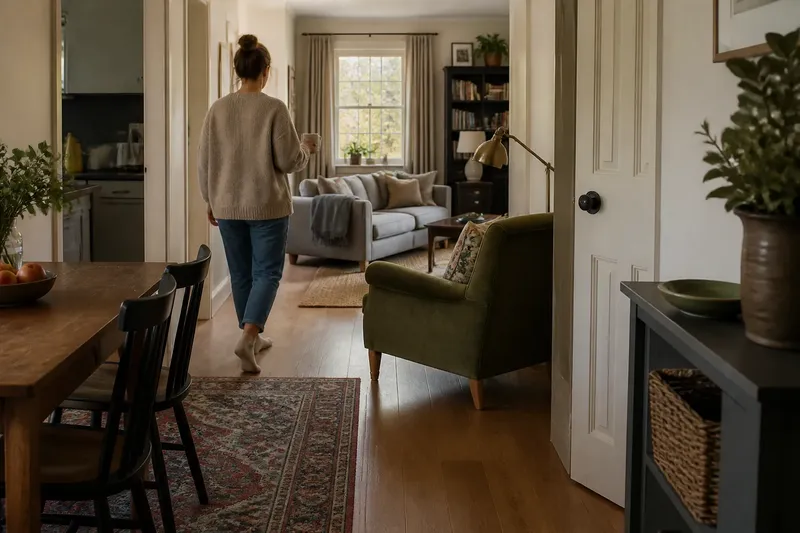
You carry a mug from the kitchen, turn sideways to pass the dining chair, then step around the corner of a rug before reaching the sofa. A clear route through a room is not an abstract design ideal; it is the path your household uses, often without thinking, and the small detours that reveal where furniture gets in the way.
What does circulation mean in a room?
Circulation is the movement between a room’s entrances, useful areas and objects. It includes the obvious walk from a doorway to a chair, but also the less formal trips made to open curtains, reach a bookcase, pass behind someone cooking, or carry laundry through a shared space.
Thinking about circulation means looking at the room as people move through it, rather than as a still arrangement viewed from the doorway. A floor plan may show that a route is technically open, while daily use reveals that it is awkward: a door clips a chair, a table corner catches a hip, or two people have to negotiate the same narrow passage.
The aim is not to make every route straight or empty. Rooms can have gentle turns and furniture can define areas. The useful question is whether the arrangement lets people complete ordinary tasks without unnecessary sidestepping, reaching across others or moving an object out of the way each time.
How can you tell where people already walk?
Notice repeated movement before deciding that a piece of furniture is in the wrong place. Over an ordinary day, watch which doors people use, where they pause, what they carry and which corners they consistently go around. A worn patch in a rug, a chair that is often left angled out, or a door kept partly closed can offer clues, but none tells the whole story on its own.
Follow one task from beginning to end. For instance, trace the route from the room’s entrance to the window when someone opens the curtains, or from the kitchen doorway to the dining chair used most often. Then follow the return journey. The obstruction may be easier to see in one direction than the other, especially if someone carries a tray or has to pull a chair back.
It can help to sketch the room simply on paper. Mark doorways, doors as they swing, windows, fixed fittings and the main furniture. Draw the routes people actually take, not the routes that seem most elegant on the page. Use separate lines for different activities if the paths cross: a walk to the sofa, a route to the cupboard, and the passage through the room may each have different pinch points.
Keep the observation ordinary and unforced. There is no need to monitor every step or turn household movement into a project. A few moments of attention during familiar routines are usually more informative than judging the furniture from a single viewpoint.
Which routes deserve the most attention?
Give priority to routes that are frequent, shared or difficult to interrupt. The passage from a doorway to the main seating area matters if people use it throughout the day. A route used while carrying a hot dish or a basket of washing deserves attention because the person needs room to move without twisting around furniture. A path that is only used occasionally may tolerate a less direct line.
Look especially at junctions, where one route meets another. The space between a dining table and a doorway, for example, may be easy to cross when the chairs are pushed in but tight once someone is seated. A chair that obstructs a passage only during meals is still affecting the room’s use; the relevant arrangement is the one people encounter most often, not the one shown in a tidy photograph.
Also distinguish a genuine route from a shortcut that creates a new problem. If people walk behind a sofa because the intended path feels cramped, shifting the sofa might help. But a new route should not send traffic through the middle of a conversation area or force someone to cross a space where another person regularly works. The better arrangement serves the room as it is used, rather than merely shortening one journey.
What should you move first?
Begin with an existing piece that clearly encroaches on a route and is relatively easy to reposition. A loose armchair, occasional table, floor lamp or freestanding cabinet may be a more sensible first adjustment than a large sofa. Move one item at a time so you can tell what changed and avoid creating several new obstructions at once.
Before shifting anything, check how it is used. A chair may be angled towards a window for a reason, and a table may hold the lamp someone needs beside it. The aim is to preserve that useful function while changing the relationship between the object and the walking path. Sometimes a small turn or a move closer to a wall is enough; a complete rearrangement may not be needed.
Say you notice that people entering a sitting room repeatedly step around the outer corner of an armchair to reach the sofa. Imagine turning the chair slightly towards the sofa and moving it nearer the wall, while leaving its reading lamp within reach. The expected observable result is a more direct passage from the door, with the chair still usable for reading. If the chair then blocks access to the window, the change has traded one awkward route for another and needs reconsidering.
Use furniture sliders only where they suit the floor and the furniture, and get help with heavy or awkward pieces rather than risking a strain or damage. For anything that depends on a manufacturer’s instructions or local safety requirements, follow those instructions or ask a qualified professional. Not every heavy item should be moved just to improve a minor detour.
How can you judge whether a new route works?
Live with the altered arrangement through the routines that exposed the problem. Walk the route while carrying the usual object, pull out the chair that is normally used, and open doors and drawers as people do in practice. Notice whether the new path feels natural without requiring someone to remember a special manoeuvre.
Look for knock-on effects as well as improvements. A clearer passage may make it harder to reach a lamp, leave a cupboard door obstructed, or place a chair too close to a radiator. Watch how people respond rather than relying only on the floor plan: if they continue to take the old detour, the revised route may not be the one they need.
One adjustment at a time keeps the comparison clear. If the route works better but the room feels unbalanced, make a modest second change and observe again. It is not worth the effort to chase a perfectly straight line, tape out elaborate maps for an ordinary room, or keep shifting furniture in search of an imagined ideal. The practical measure is whether daily movement has become less fussy without undermining another use.
What questions do people ask about a clear route through a room?
Does every room need a straight walking path?
No. A route can bend around furniture and still feel comfortable if it is easy to read and does not force repeated dodging. Straightness matters less than whether people can pass through and reach what they use.
Should furniture sit against the walls to open the middle?
Not necessarily. Pushing every piece to the perimeter can leave useful areas awkwardly disconnected, while a chair or sofa placed well can define a sitting area. Choose positions by observing movement and use, not by treating an empty centre as the goal.
What if the room is used for several activities?
Follow the main routes for each activity and look for places where they conflict. An arrangement may need to favour the most frequent or least flexible movement, while keeping occasional routes workable.
How often should furniture positions be reconsidered?
Reconsider them when a routine changes, a new obstruction becomes noticeable, or people repeatedly move an item to get through. There is no need to revise a layout that continues to support the household’s ordinary movement.
Can a small change make a room easier to use?
Often, the most useful adjustment is modest: turning a chair, shifting a table out of a doorway’s swing, or moving a freestanding piece away from a habitual path. The clear route through a room is the one that fits the journeys people actually make, including the turns, pauses and objects they carry. Observe those journeys first, then change only what interrupts them; the room can remain familiar while becoming easier to move through.