The Side Table’s Journey from Utility to Room Accent
A side table can keep a chair useful or give a room a quiet focal point. Choose its role, shape and display with a clear sense of daily use.
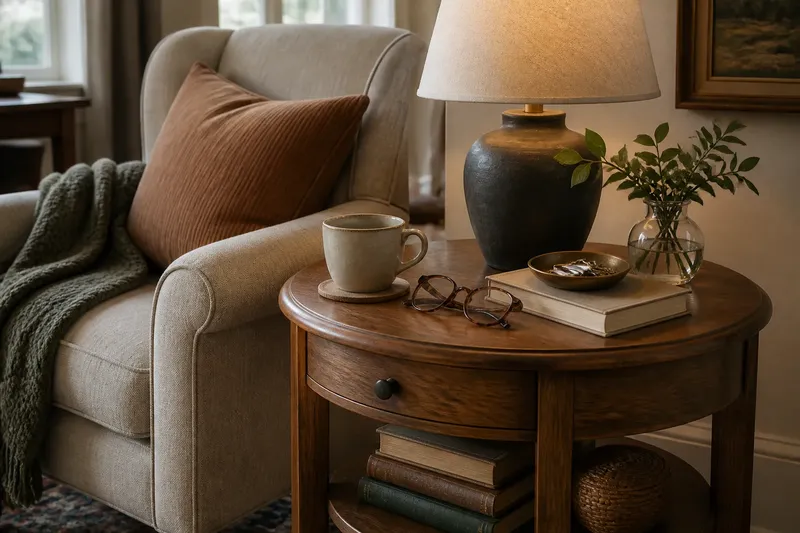
A cup of tea cools beside an armchair while a book slides towards the floor. A side table would solve the immediate problem, but the choice soon raises another: should it remain a discreet landing place, or become part of the room’s expression? A side table’s role can move from utility to accent without losing its usefulness; the best choice depends on what happens beside the chair each day.
What should a side table do first?
Start with the chair or sofa it will serve. Notice what you reach for while sitting there: perhaps a drink, reading glasses, a remote control, a notebook or a lamp switch. The table’s first job is to make those ordinary actions easy. If it is awkward to reach, too small for the items that regularly gather there, or unstable beneath a mug, a carefully arranged top will not compensate.
Then consider what the room needs visually. A substantial upholstered chair may welcome a slender table that leaves its outline clear; a light chair can take a more sculptural companion. The table need not match the furniture. A contrast in material or shape can feel deliberate when one feature connects it to the room, such as a timber tone echoed in a picture frame or a metal finish repeated in a lamp.
These priorities suggest three useful approaches: a practical landing place, a composed display surface, or a mixed-use table that changes with the hour. None is inherently more tasteful. They suit different habits and different rooms.
When does a practical table suit you?
Choose utility first if the seat is used for reading, knitting, television or a regular evening drink. The surface should accept the things that genuinely accompany those activities, with enough open space to set something down without rearranging a display. A lower shelf can hold a few books or a folded throw, while a drawer is useful for small items that otherwise drift across the tabletop.
Material matters here as much as appearance. A sealed wood surface is straightforward to wipe; glass can keep a compact corner visually open but shows marks readily; a painted finish may bring colour while asking for gentler handling. Consider how the table will meet cups, keys and everyday cleaning, rather than choosing solely from a catalogue image.
This approach suits a busy family room, a regular reading chair or anyone who prefers surfaces to stay ready for use. It also works in a quieter room if the table’s shape and finish are considered carefully. Utility is not the opposite of decoration: a well-proportioned table, a handsome lamp and one well-chosen book can look composed without making the surface difficult to use.
When should the table become a display?
A more decorative table suits a seat used occasionally, a quiet corner, or a room where the surrounding furniture already provides practical storage. Here, the tabletop can carry a lamp, a small vase, a framed photograph or a bowl that has meaning in the household. A few objects with varied heights and textures usually read more clearly than a dense collection.
The distinction is not between useful and useless things. A lamp remains useful, and a little dish may catch a ring or a pair of keys. The difference lies in what is allowed to occupy the surface most of the time. If the display is meant to stay intact, everyday belongings need another natural landing place nearby; otherwise, the table will be repeatedly cleared or the arrangement will become a pile.
This option suits someone who enjoys a considered vignette and does not need the table to absorb many daily tasks. It can also help a small furnishing feel intentional in a larger room. Avoid choosing objects simply because they are small enough to fit: leave some visible surface, and let the table’s material and silhouette remain part of the composition.
Can one table serve both purposes?
A mixed-use table is often the most realistic choice for a lived-in room. Keep a dependable part of the top clear for a cup or book, then reserve the rest for a lamp or a compact arrangement. A tray can gather smaller decorative objects; it can also be lifted aside when the surface is needed. The arrangement should be easy to disturb and restore, not a miniature ceremony.
Say you read in an armchair after work, but the same corner is used for a visitor’s tea at the weekend. You might choose a stable timber table with a clear patch beside the lamp and place a small vase and a shallow tray at the far edge. The expected result is a seat that stays ready for reading while the table still looks settled when no one is using it.
This approach suits rooms with changing routines and people who want a little character without protecting every object from ordinary use. What is not worth the effort is continually styling a surface that serves as the household’s main drop-off point. In that case, a simpler arrangement—or a different landing place for loose belongings—will be easier to live with.
Which side table should you choose?
Use these questions to decide which approach fits your room, rather than treating any one style as a rule.
- What happens beside the seat? List the items used there regularly. If several need a home, favour an open, practical surface or a mixed-use layout.
- How often is the seat occupied? A frequently used chair usually benefits from a table that is easy to reach and clear. An occasional corner can carry a more deliberate display.
- What must the tabletop hold? A lamp, a drink and a book may need more usable space than a small decorative grouping. Choose the surface for its real duties, not just its footprint.
- What is already happening in the room? If nearby furniture has strong patterns or substantial forms, a quieter table may settle the arrangement. If the room feels plain, a distinctive material or shape can add interest.
- How much tending will suit you? A display that needs frequent dusting or constant resetting may become a nuisance. Select objects and finishes that fit the care you are willing to give.
For a final sense check, sit in the chair and imagine reaching for the item you use most. If the table feels distant, crowded or visually intrusive from that position, reconsider its form or placement before adding objects. The label, maker’s guidance and local requirements matter where they apply, particularly for care and safe use.
What questions help settle the choice?
Should a side table match the chair?
No. A related finish, shape or material can tie the pieces together without making them identical. Choose a contrast that feels purposeful in the room rather than introducing several unrelated finishes at once.
Is a round or square side table better?
A round top has no corners to catch against and can soften a room of straight lines. A square or rectangular top may suit a squared chair and offer a more orderly place for books or a lamp; decide by the seat, available space and objects it must hold.
What belongs on a decorative side table?
Choose a small group with different heights or textures, such as a lamp, a modest vase and a shallow dish. Keep enough of the top usable for its intended purpose, and avoid filling it with objects that have no connection to the room or household.
How can a useful table still look considered?
Give everyday items a deliberate arrangement rather than leaving them scattered: keep the lamp in place, group smaller things in a tray and leave a clear area for setting down a drink. A side table’s character often comes from the relationship between its objects and its daily use, not from decoration alone.
The side table is a small furnishing, but its role makes the room’s habits visible. Choose its main task first, then let colour, material and display grow from that decision. A useful side table can become an accent through the way it belongs beside the seat, while a beautiful one earns its place by remaining comfortable to live with.